|
|

 |
Carndonagh/ Donagh Celtic High Cross and Standing Stones Info & Photo Gallery |
|
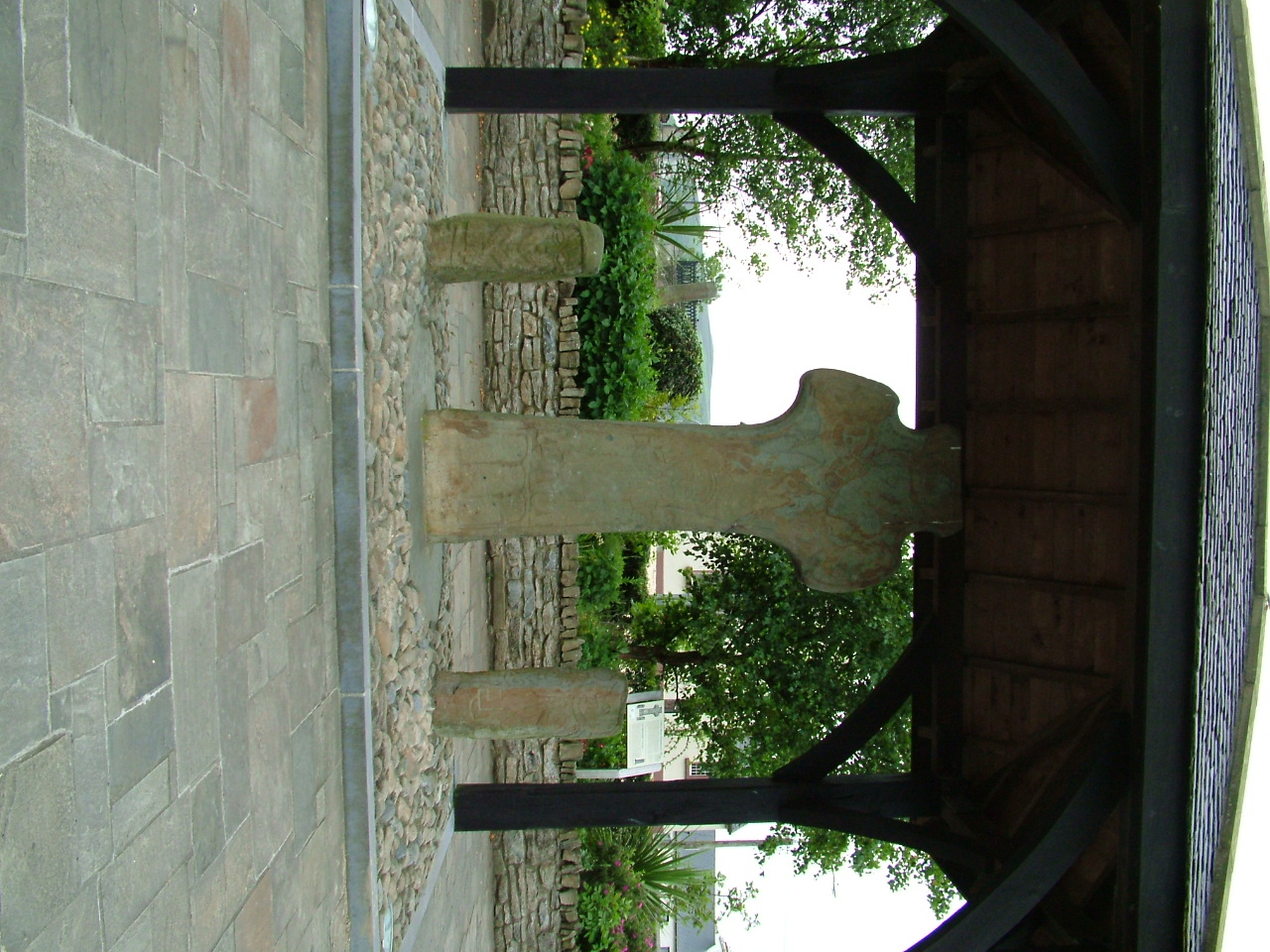
Name: Carndonagh Celtic High Cross, Donagh High Cross, Also know as St Patrick High Cross.
Location: Carndonagh Town,
Inishowen Peninsula, Co. Donegal, Ireland.
Access: Located in the
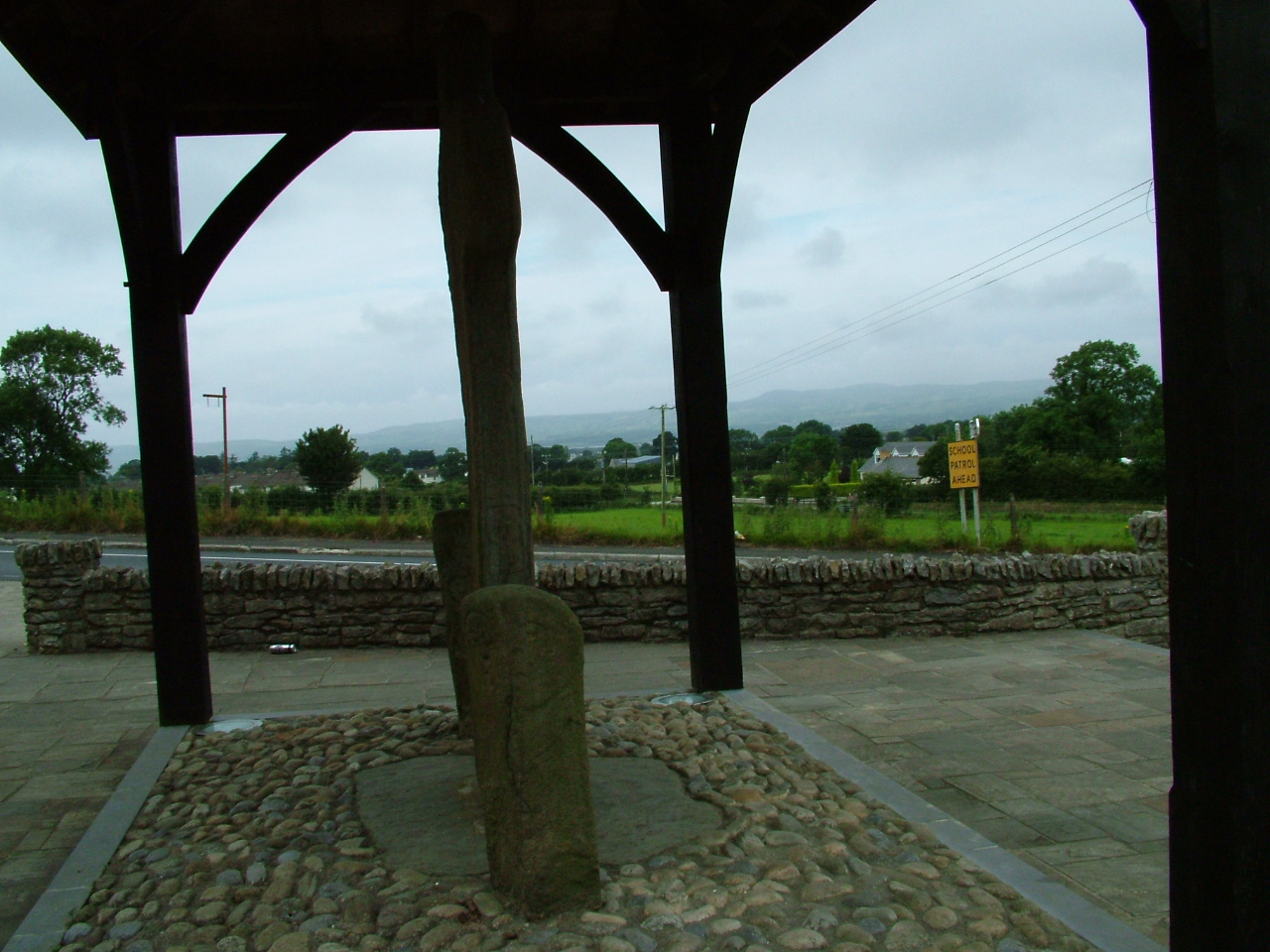
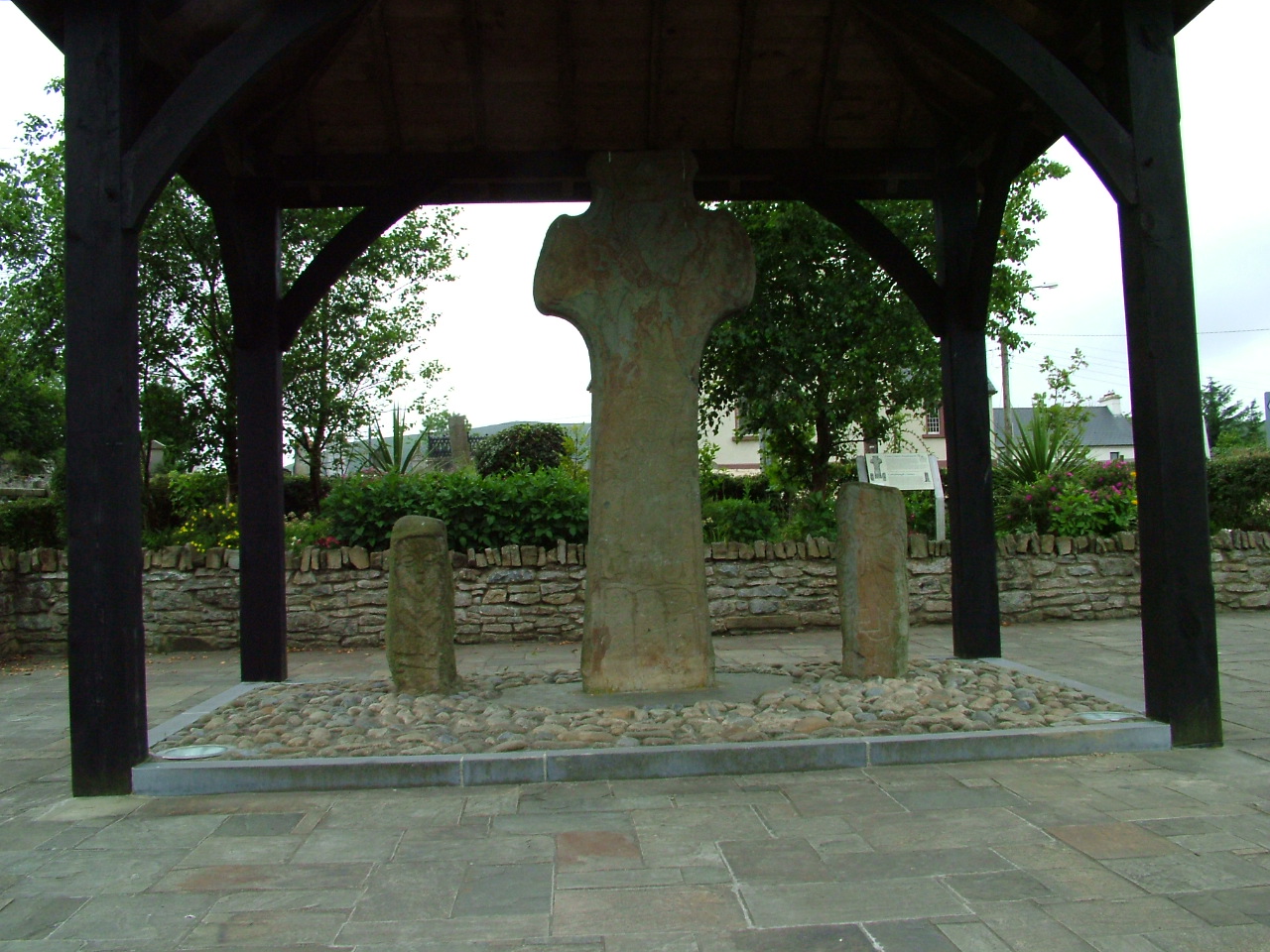
town by the main road on the R238 just before the junction with the R244 on the west end of the town. Displayed under a modern wooden shelter at the churchyard beside Carndonagh Community School. The site is accessible to visitors.
Description: A
decorated non-ringed cross with geometrical and interlace
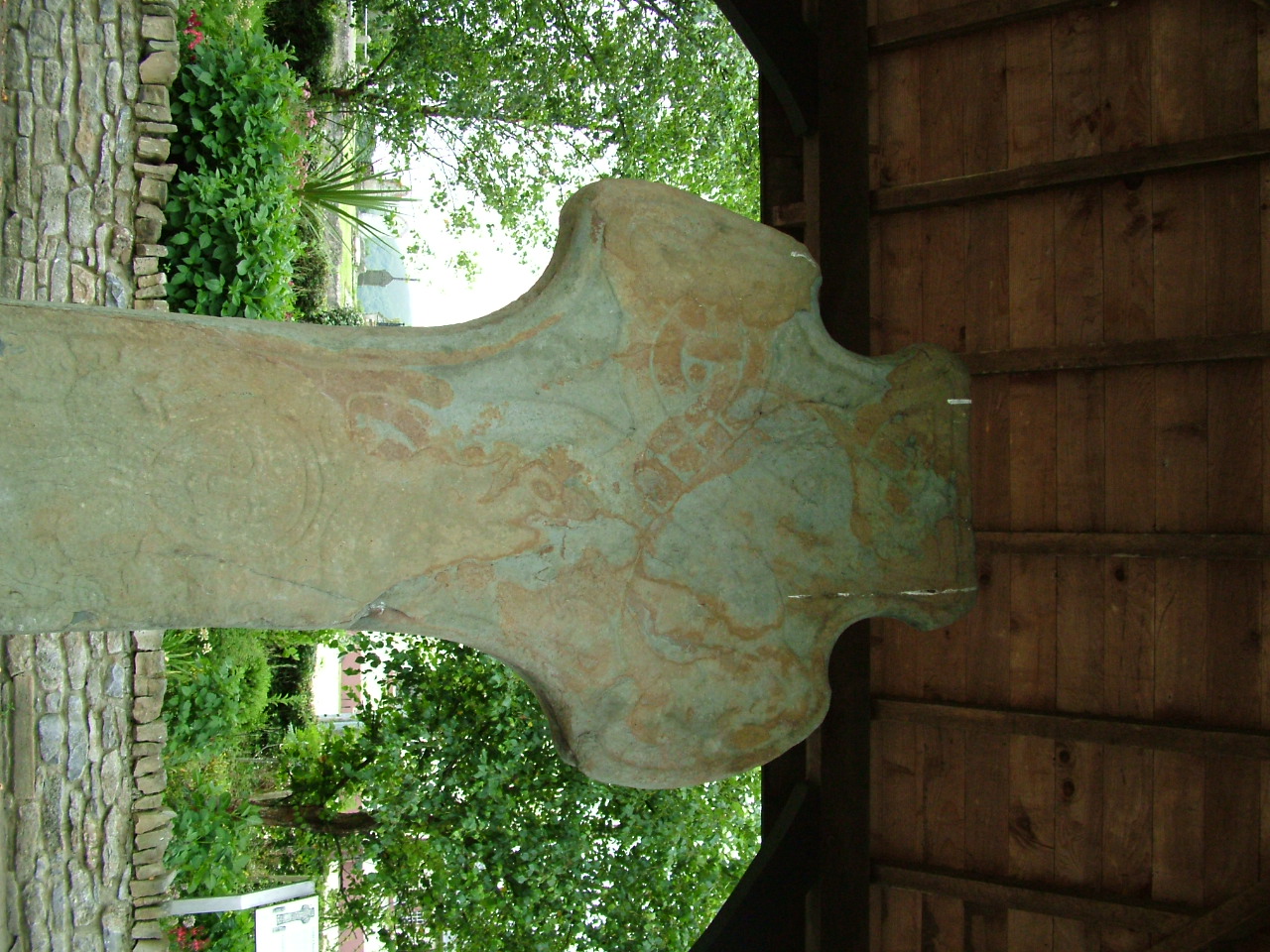
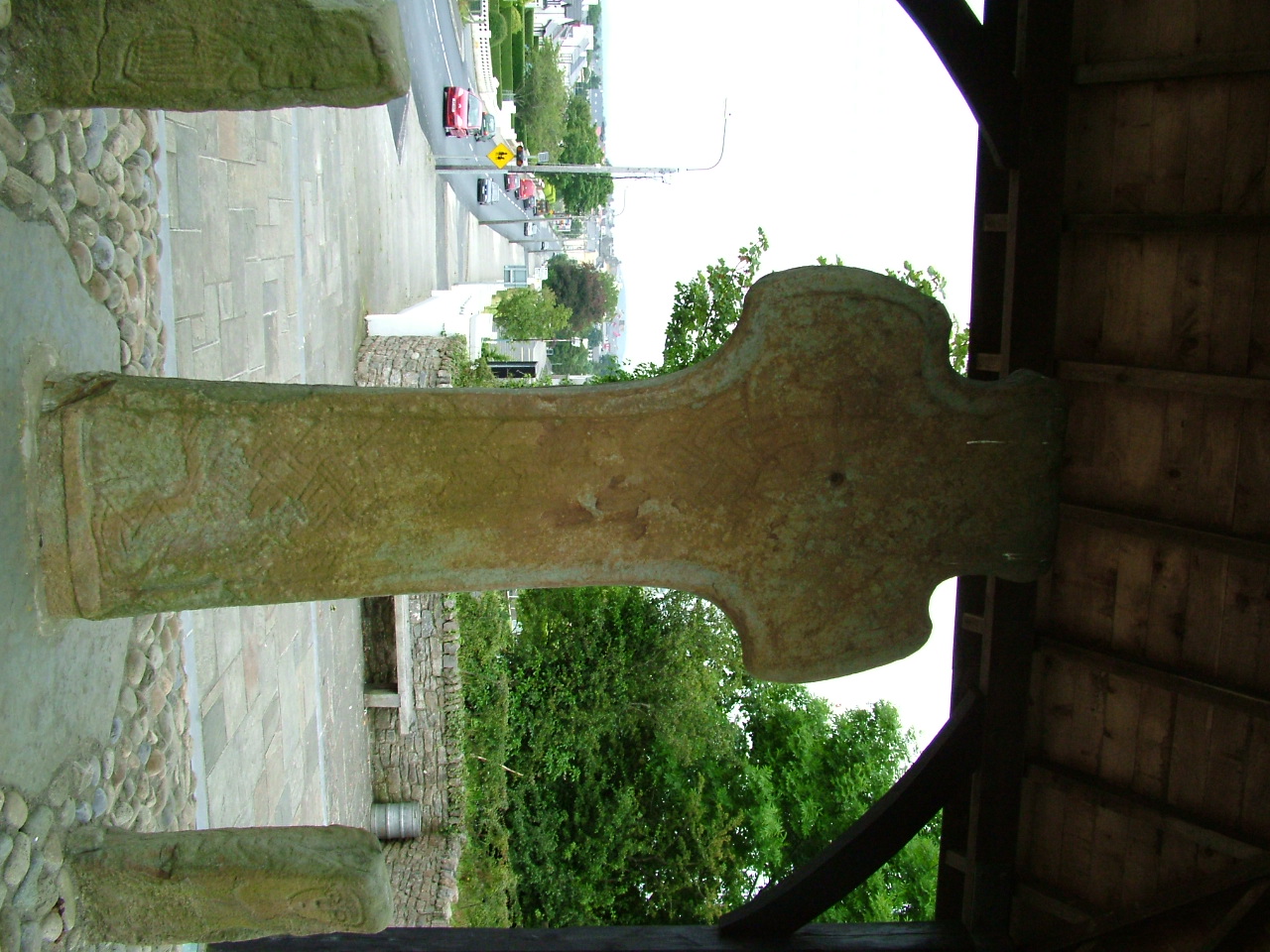
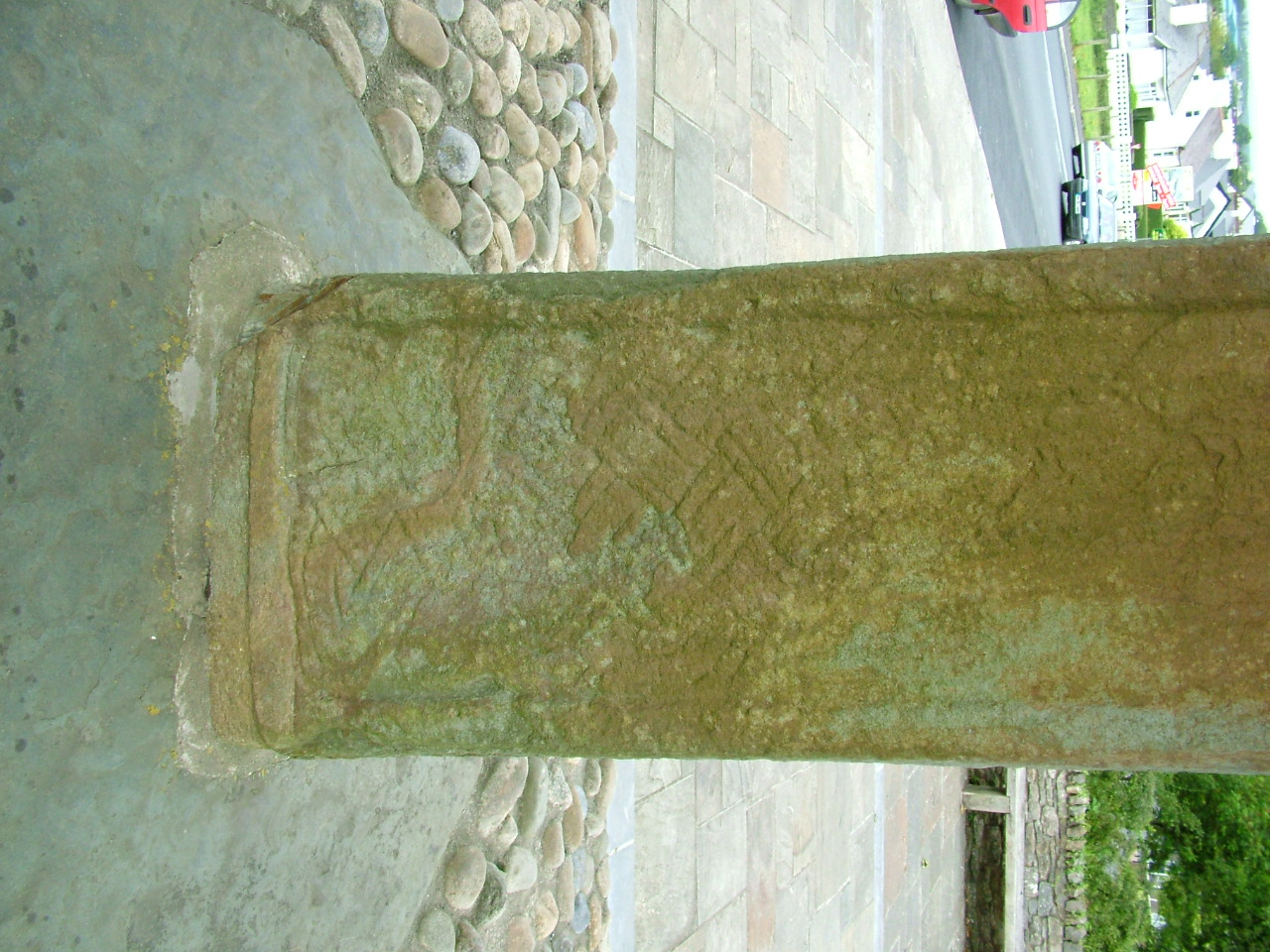
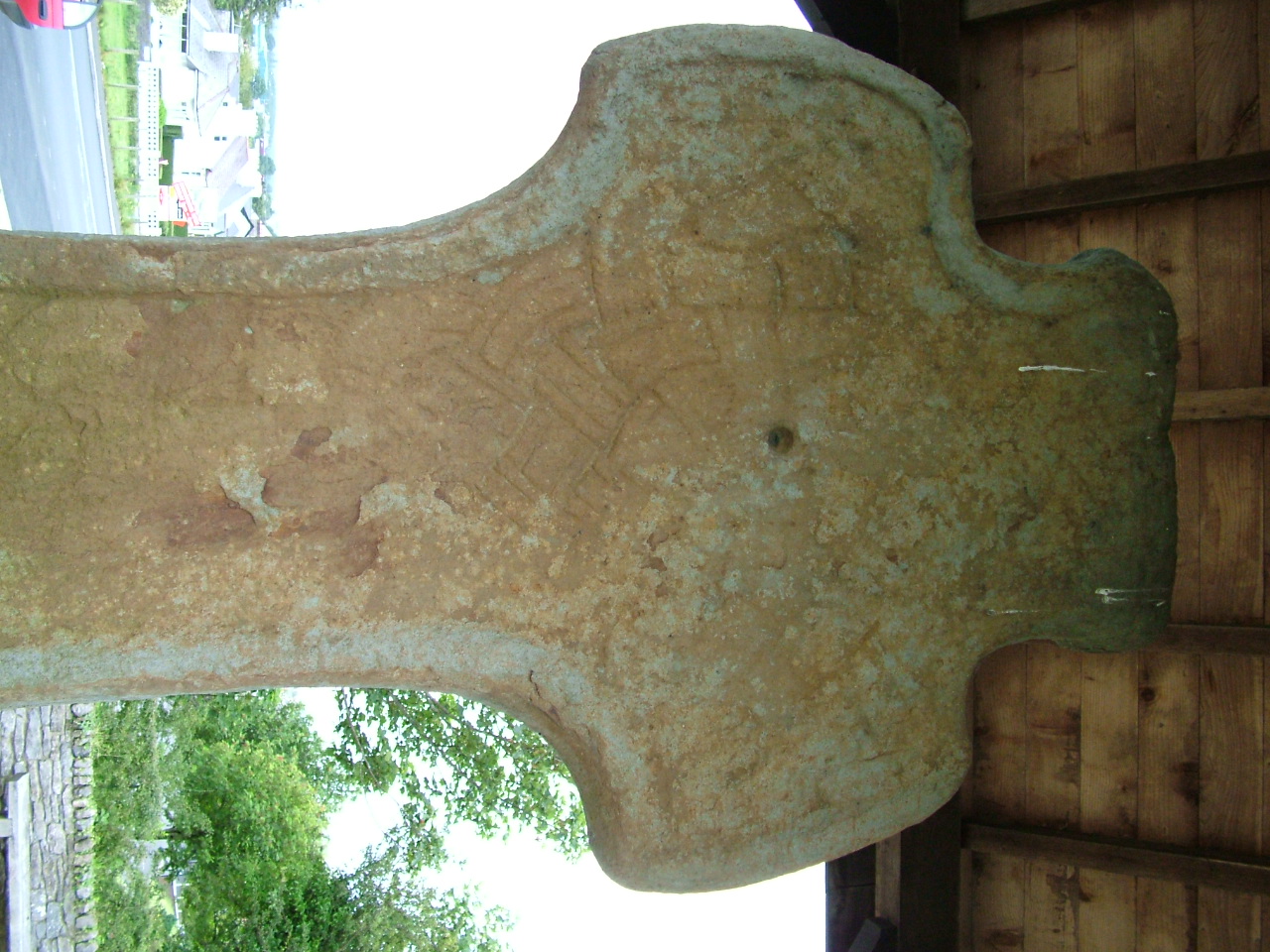
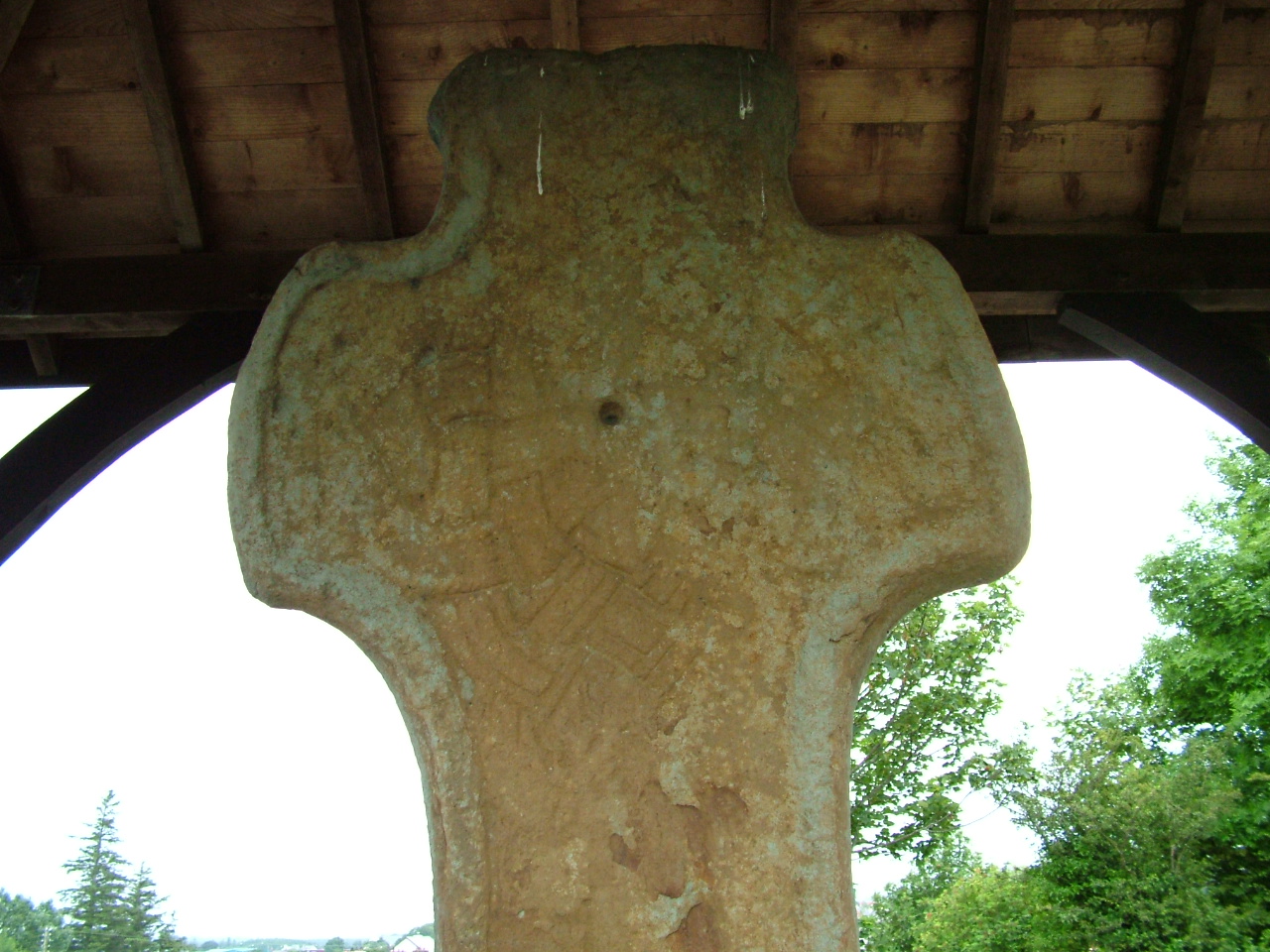
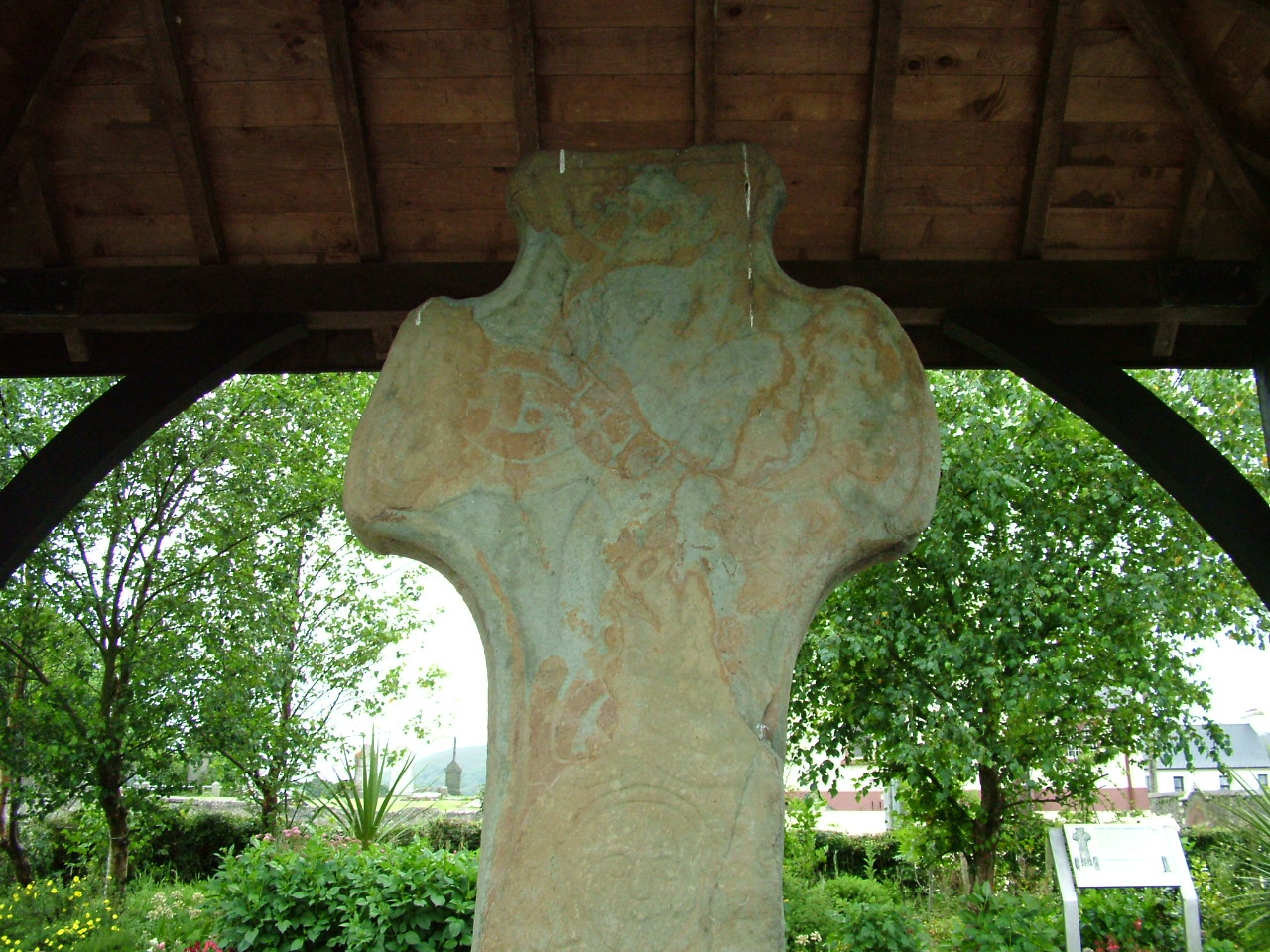
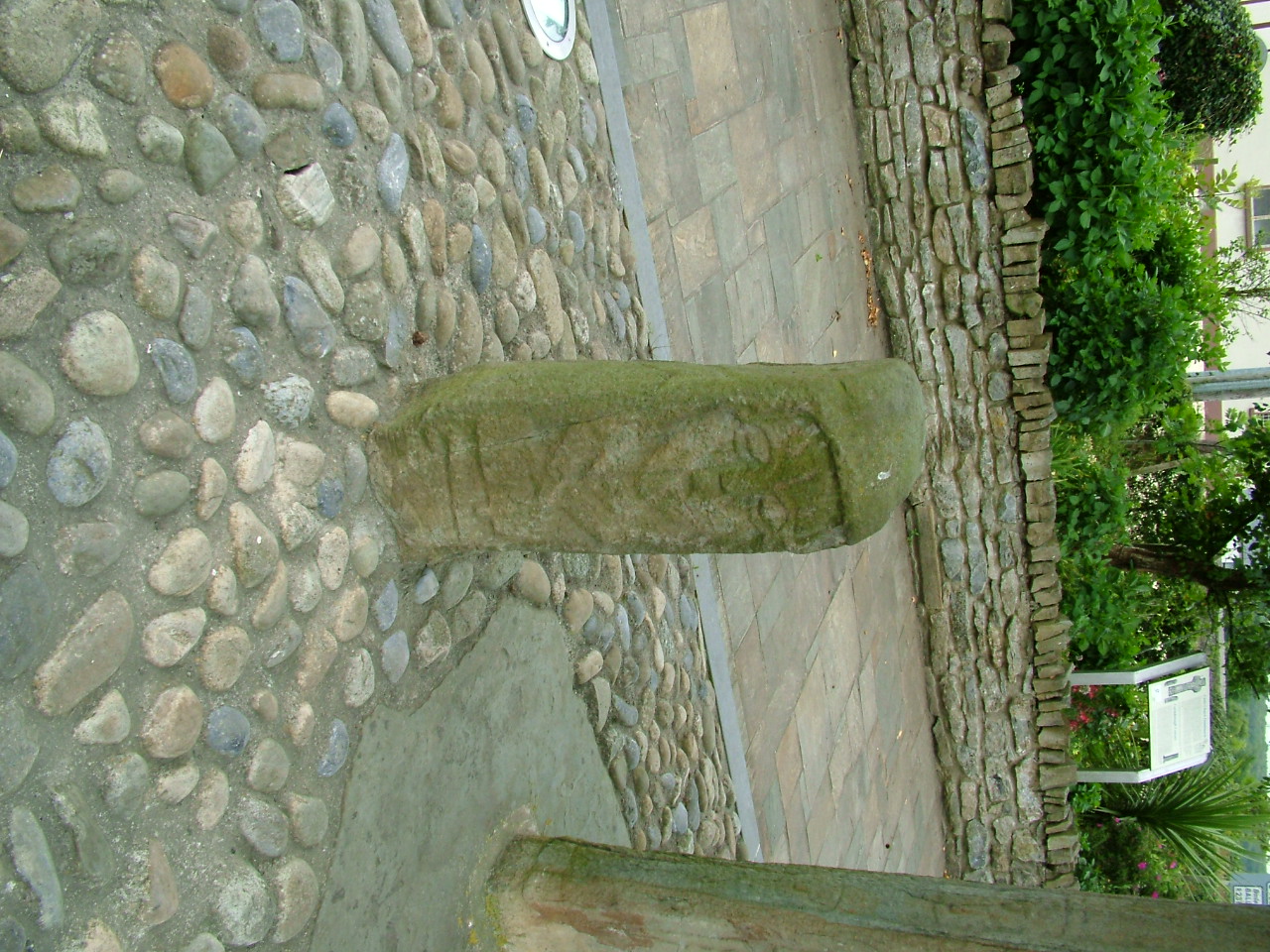
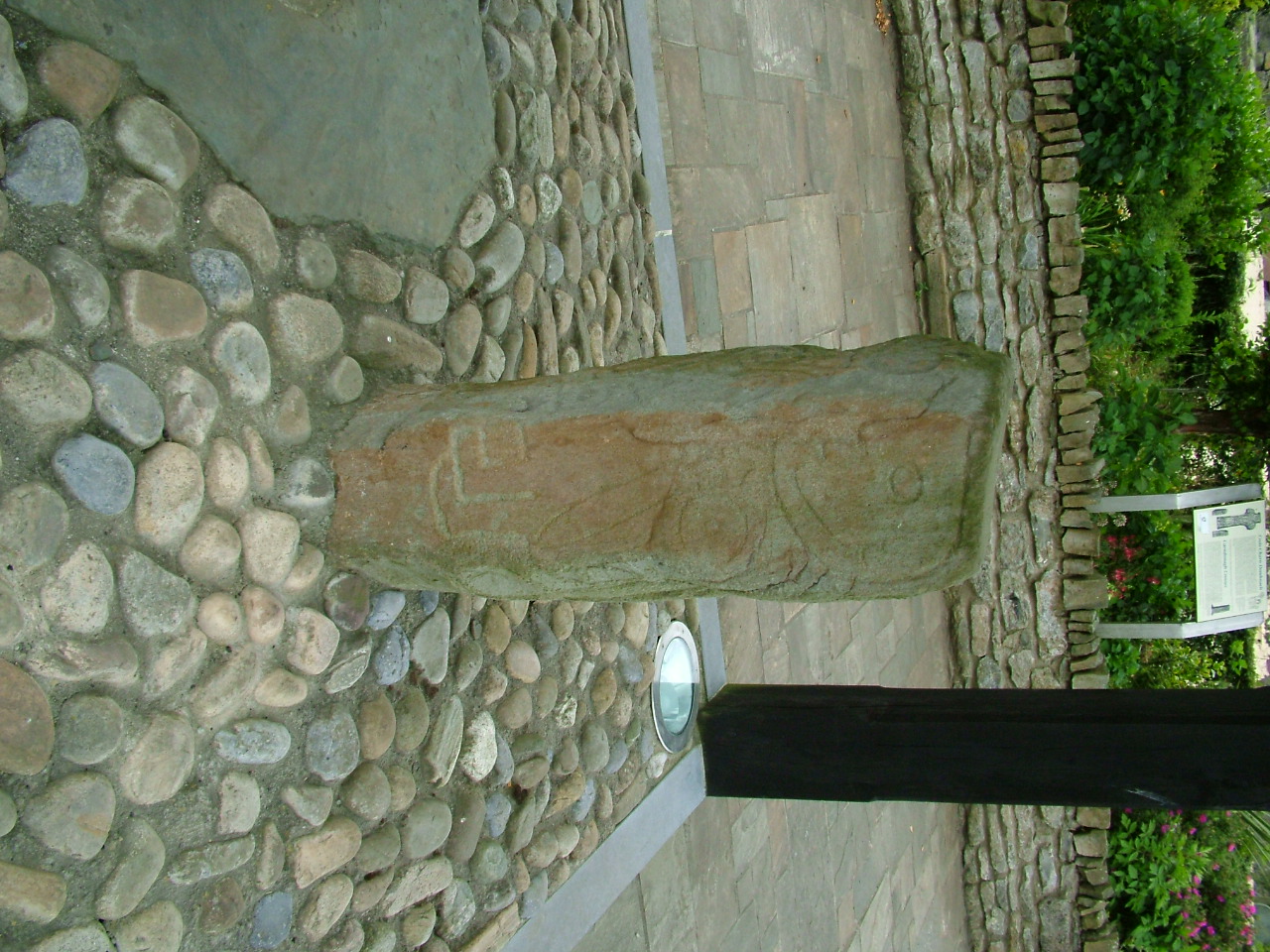
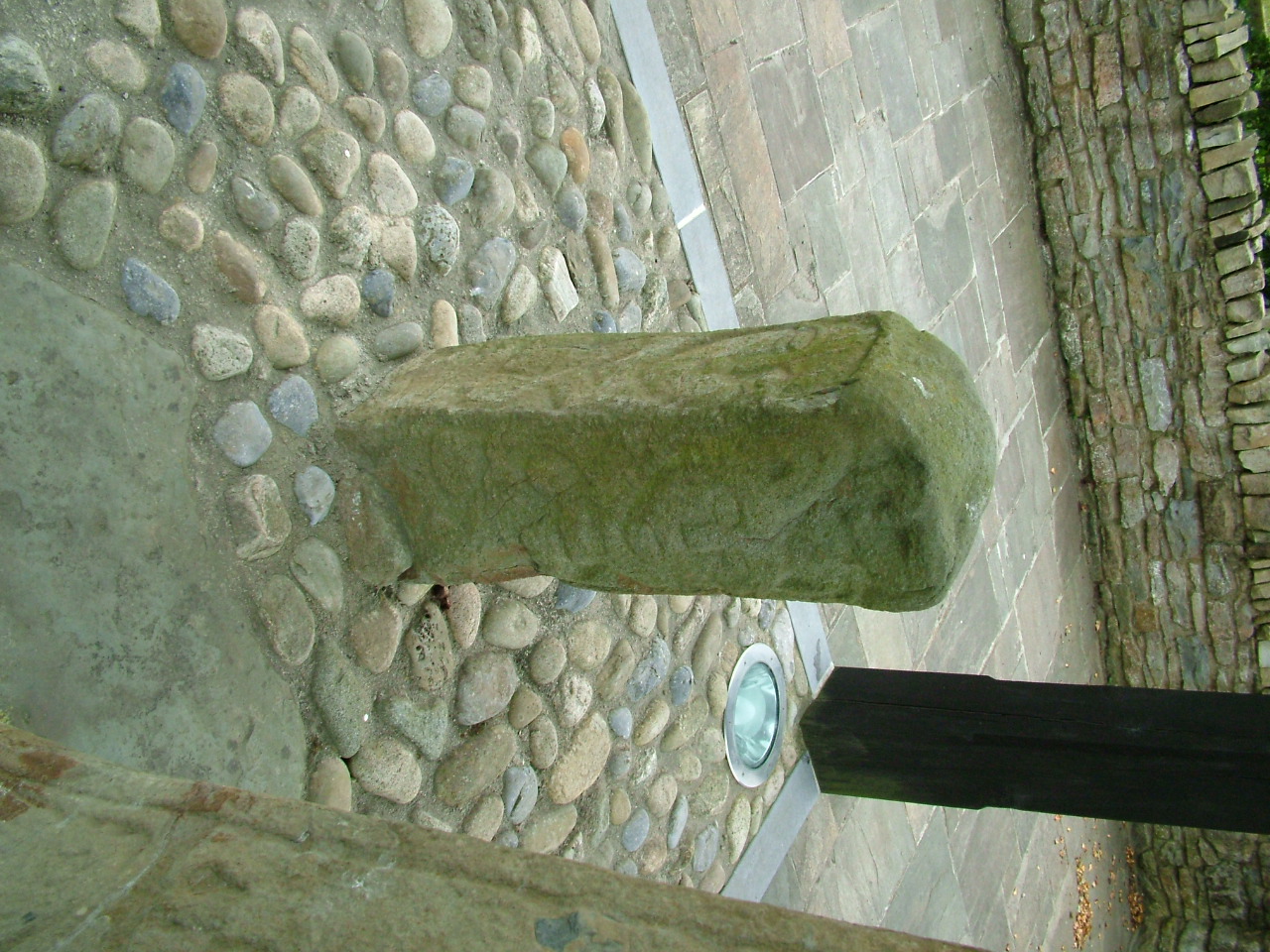
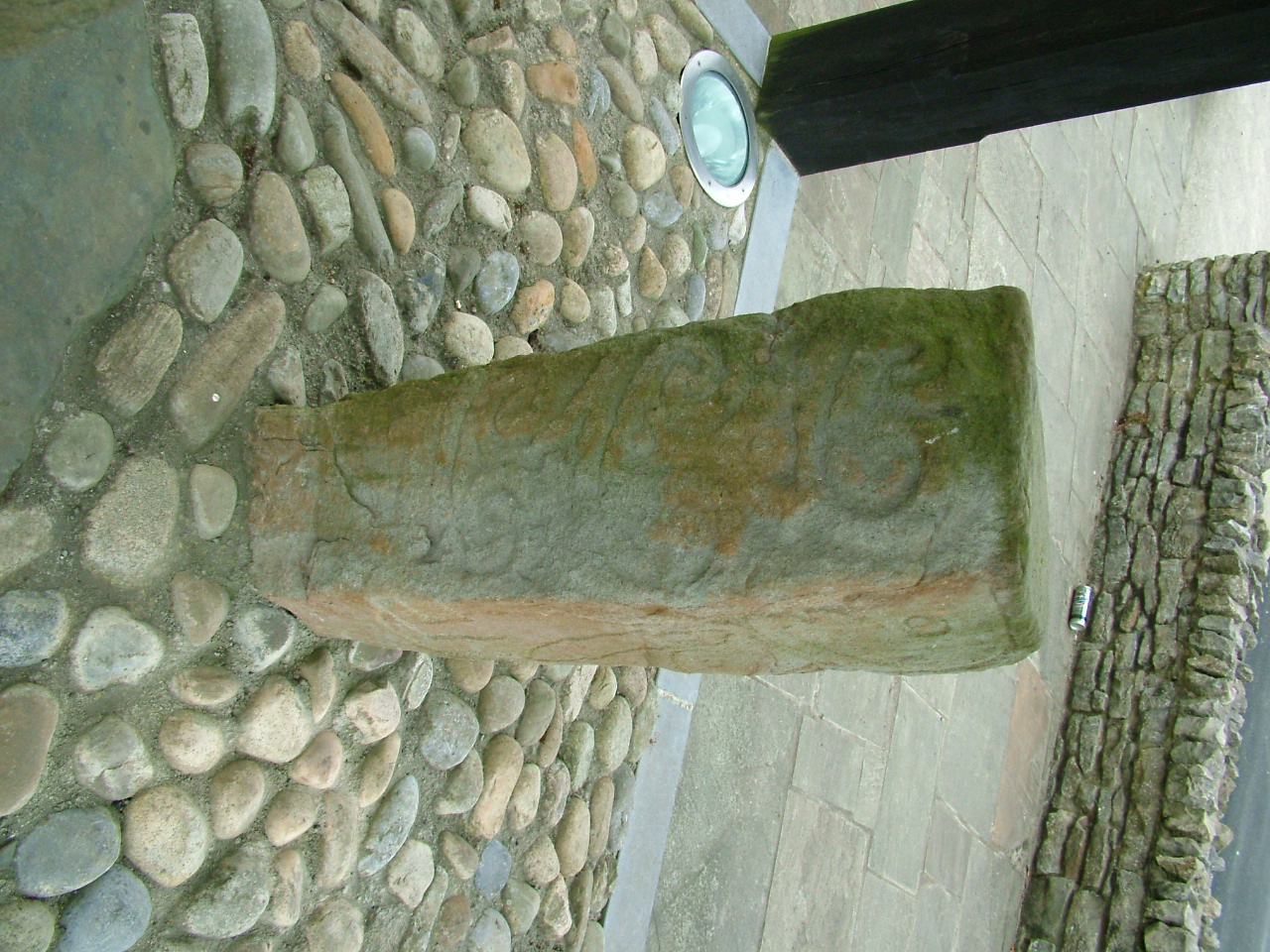
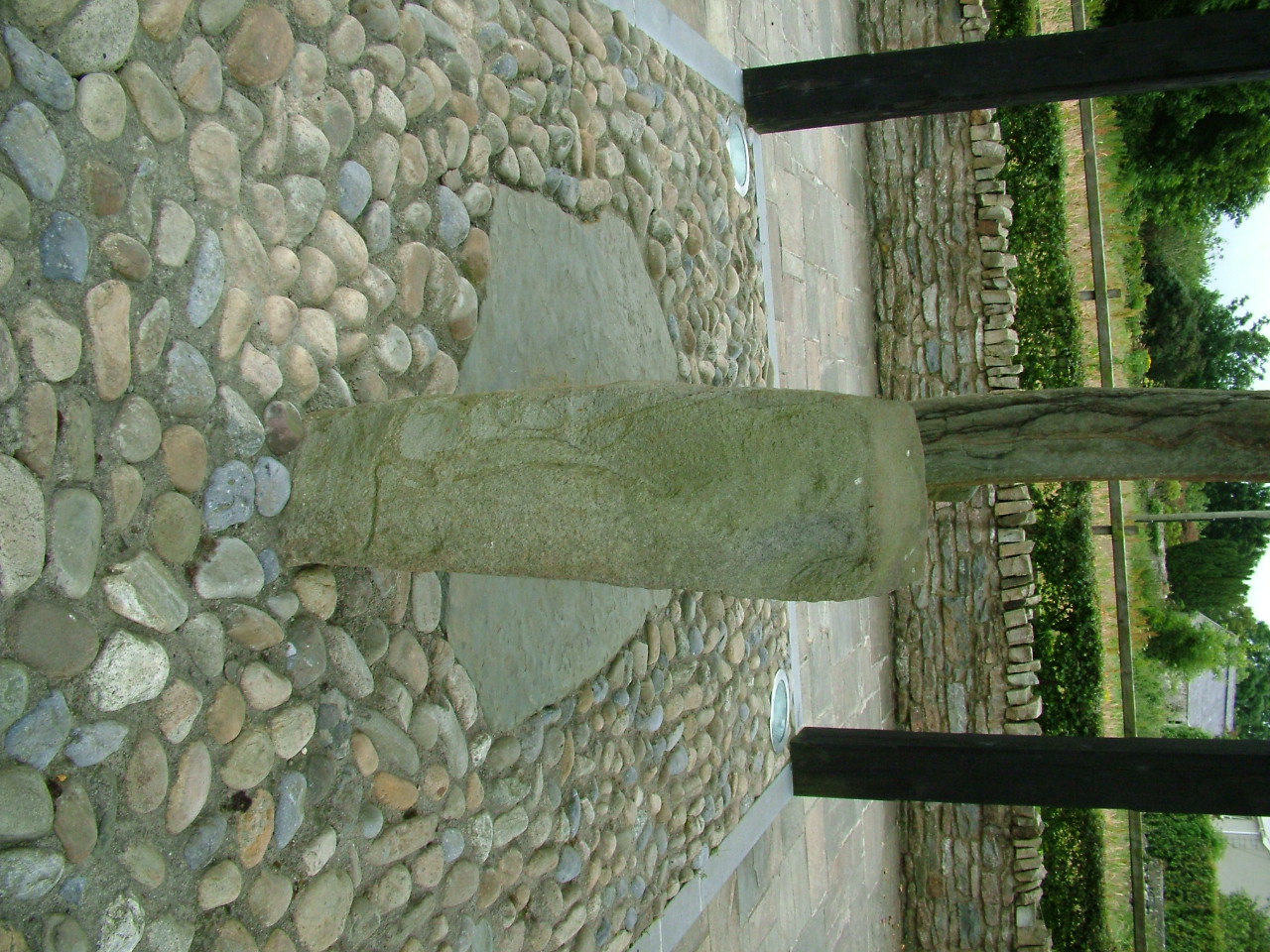
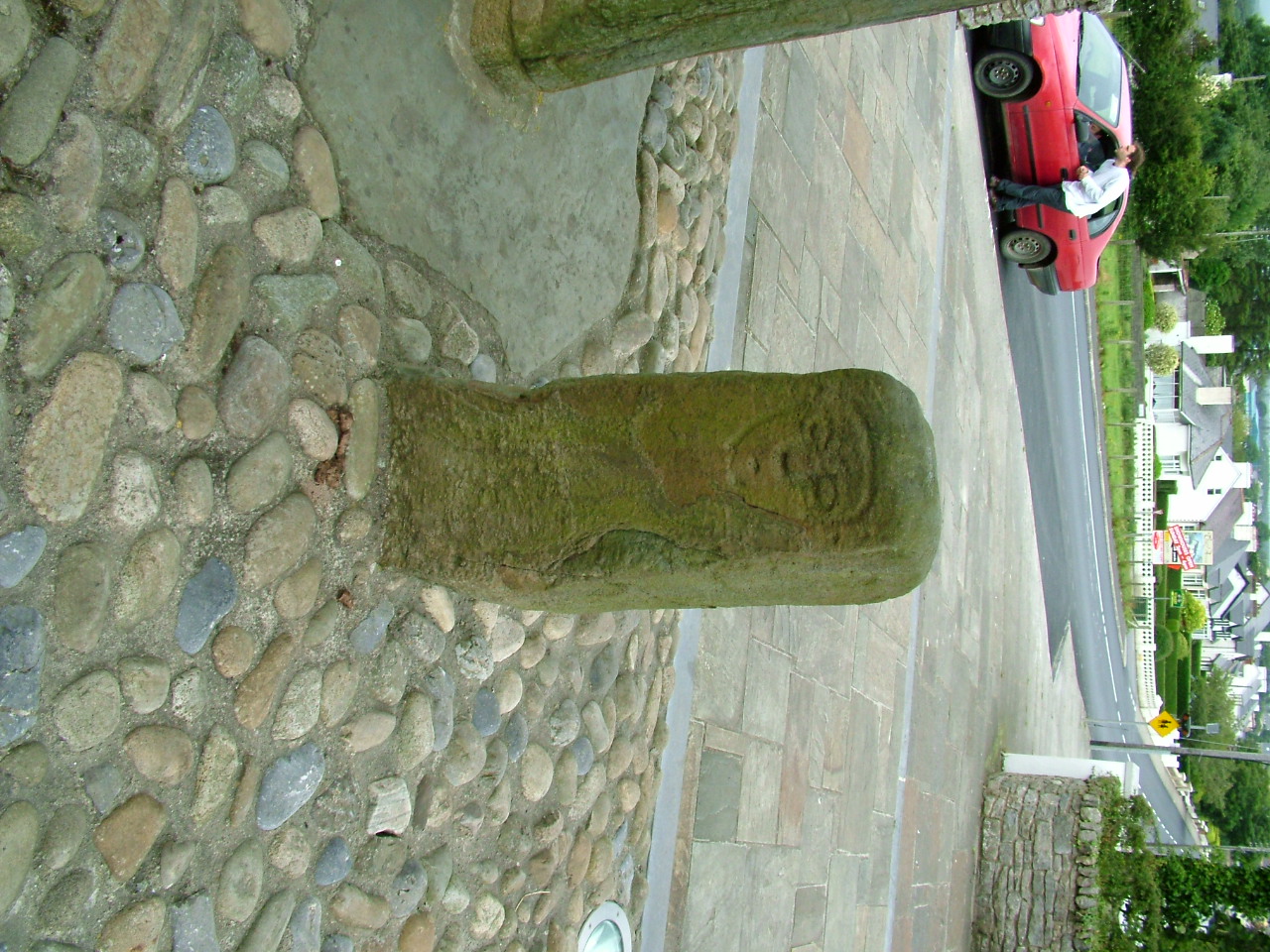
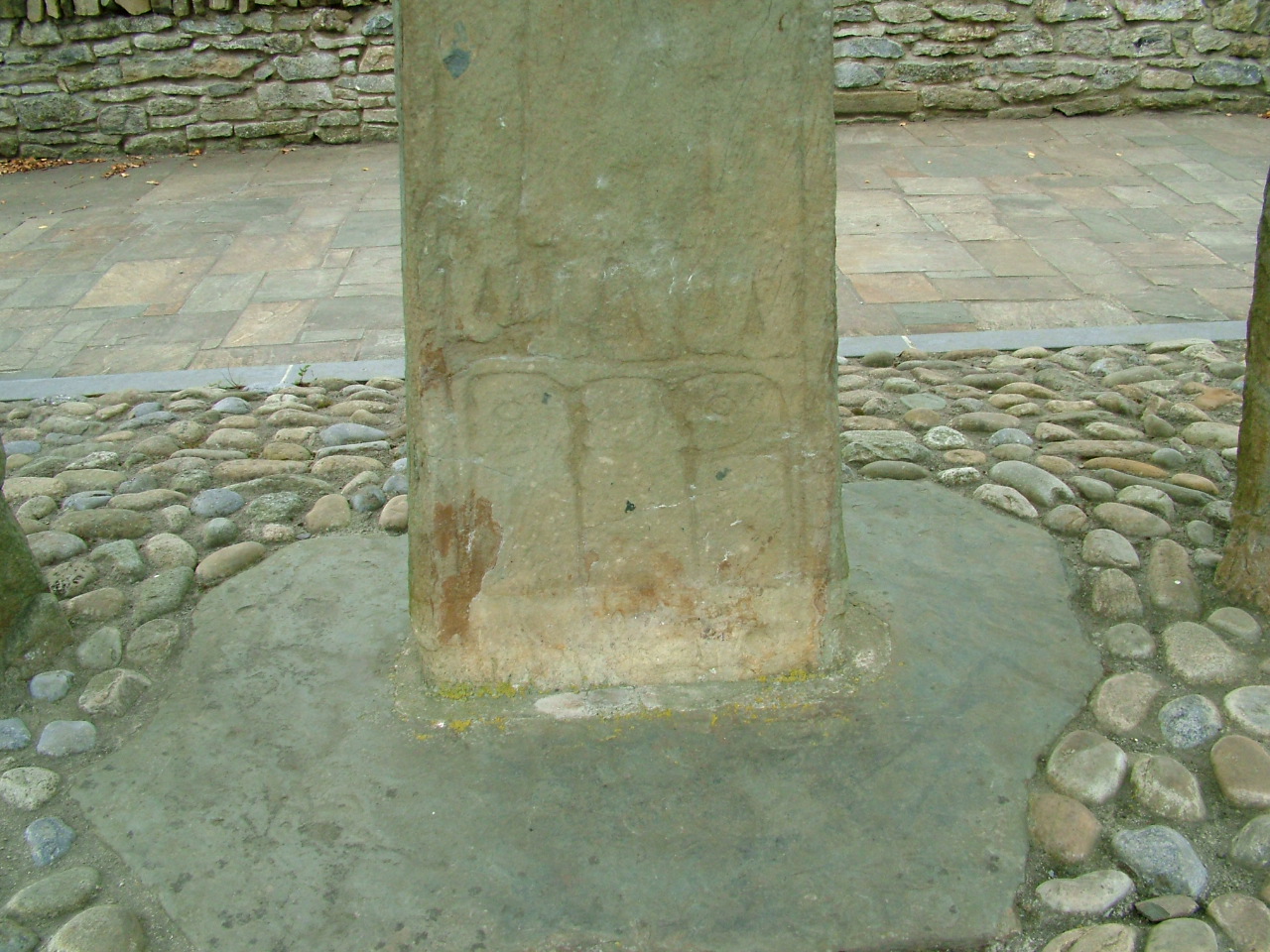
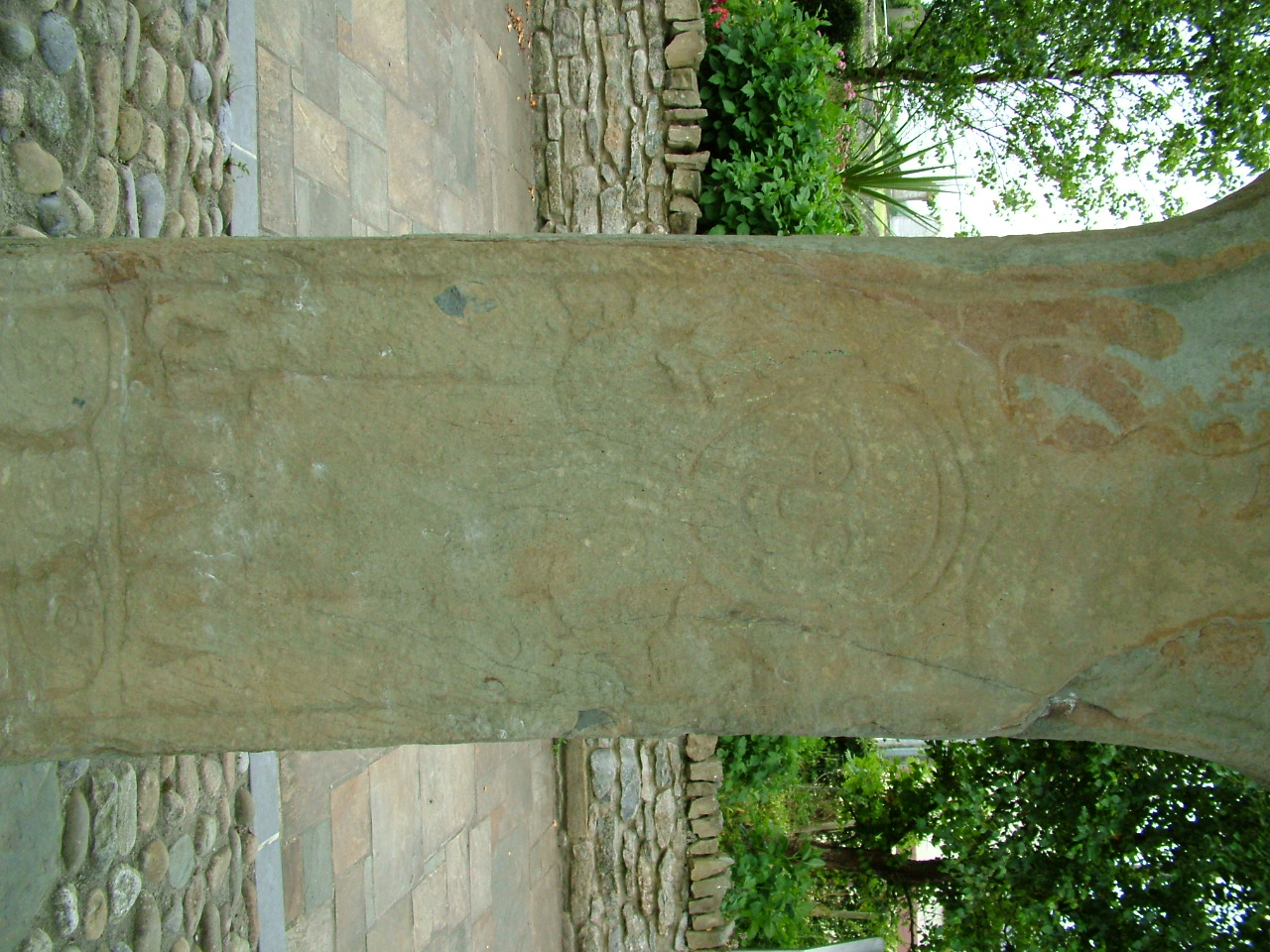
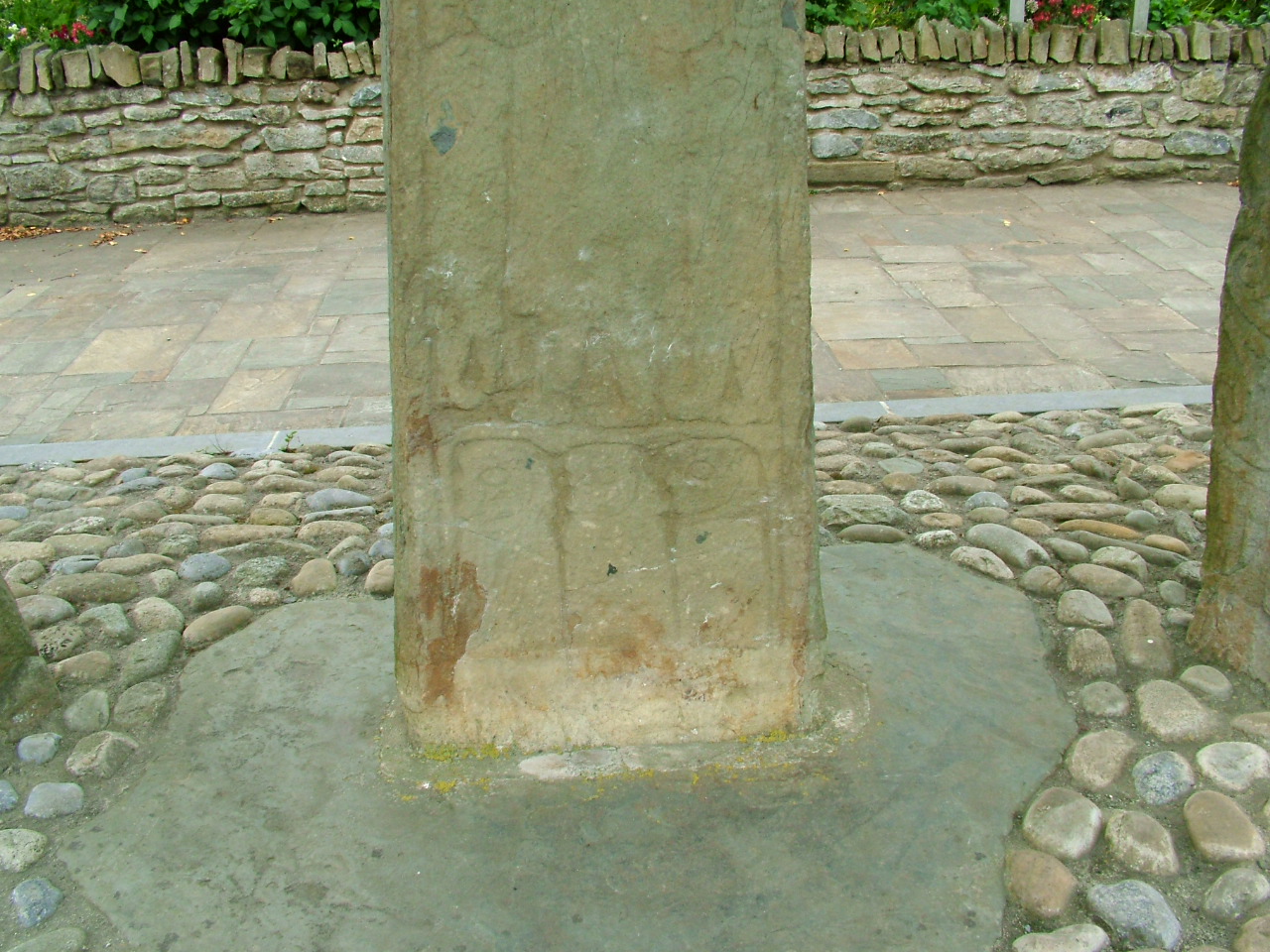
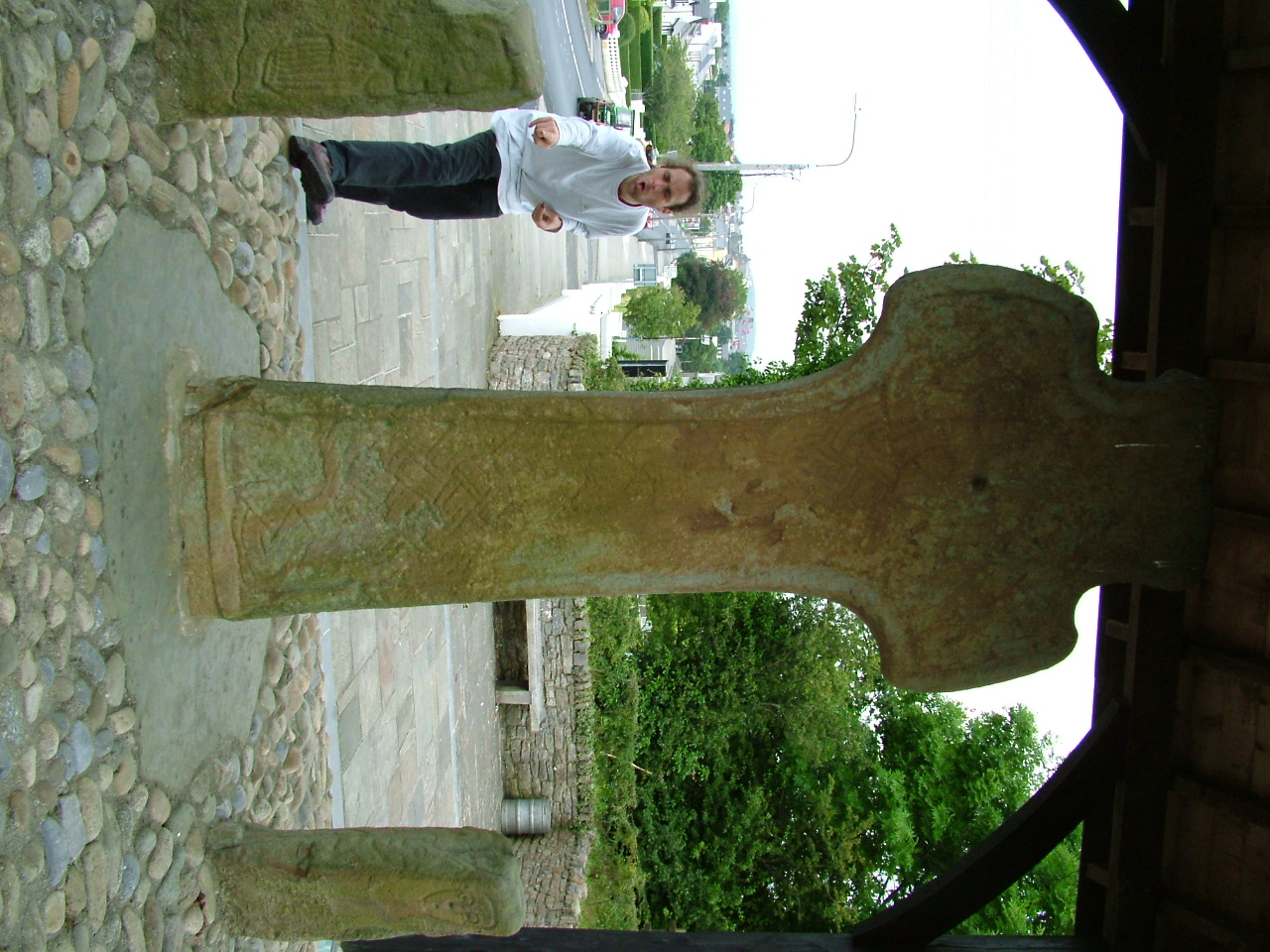
designs and two smaller face carved outliner Standing Stones. The cross has interlaced celtic knotwork above a main figure, with 5 smaller carved figures around and below him. Early medieval carved stone cross slab / free-standing high-cross type (often described as a large cross-shaped slab rather than a later pierced “ringed” high cross). It stands with two attendant “guard” pillars and is part of the group known as the Carndonagh Stones. The cross is decorated in low relief with interlace and figural motifs — one face (west) is covered in intricate Celtic interlacing; the other (east) shows a crucifixion or figure with outstretched arms and other simplified figures and motifs. The carving mixes Insular/“Celtic” decorative art with Christian iconography
Traditional Lore: Traditional / early view: Françoise Henry and some antiquarians argued for a very early date (7th century AD), linking the interlace style to manuscript art such as the Book of Durrow (c. 650). This view helped make Carndonagh important in arguments about the early origins of Insular cross sculpture.
Revisionist views: Other scholars (e.g., Robert B. K. Stevenson, Peter Harbison) have argued for a slightly later date — commonly c. 9th–10th century — placing the stones in the corpus of early medieval carved monuments but cautioning against too-early assignments. The result: a usual published range is 7th–10th century, with many modern summaries favouring late 1st millennium AD (8th–10th c.) as most likely.
Information: Dated to the 7th century. But may be much older. Carved from laminated red/brown sandstone.
Measurements: Frequently described as c.3 m (approx.) tall.
Lat. 55.24996 N : Long.
: -7.27207 W
Other Sites close by: Ballylesky Cross Inscribed Stone  Glennagannen Standing Stone Glansalt Standing Stone Carrickafodan Megalithic Tomb Cashel North Standing Stone Cashel South Standing Stone Cashel West Standing Stone Glennagannen Standing Stone Glansalt Standing Stone Carrickafodan Megalithic Tomb Cashel North Standing Stone Cashel South Standing Stone Cashel West Standing Stone
Mythology:
Stories:
top

© Shee-Eire:
|